Thursday, August 4, 2016
Pastor Pete and the Cat by Jane Robertson
Thursday, October 24, 2013
I Think I'm Infected but Not in a Good Way
There are two dyslexics working in a kitchen. One says, "Can you smell gas?" And the other says, "I can't even smell my own name." (Remember, it's just a witticism, a spoonerism, if you will. Not necessarily derogatory.)
BLACKOUT was an entertaining read, fast-paced, intriguing. I guess you could say engaging. I was engaged, then… Well, I think you'll like those characteristics. I haven't read its predecessor if there is one. But after reading it, I feel like one of those kitchen workers. Nonetheless, I don't have dyslexia. There just wasn't enough narrative explanation for my tastes. Maybe if there are successor volumes, I could be more satisfied. But that's speculative.
Perhaps I have the worldwide virus that's a premise to what happens in the novel. I finished the whole book, but I didn't learn sufficient information about that virus. Or about the motivation of both the mentioned and unmentioned antagonists in this work. There was not nearly enough knowledge and development for my tastes, other than the virus is totally weird, inexplicably so, and creative. One thing I did learn about the virus was the fact that it only infected youth --- teenagers --- and it made them super- or sub-human. Superpowers.
(So, because I'm old, I don't have "that" virus. Whew! Something's infected me, though. I hope it can be treated.)
In BLACKOUT the primary players on the dark side, who, of course, are all infected, include Alec, Laura, and Dan. And on the side of light --- after all, they're probably Saints, since they're from central Utah --- are Aubrey and Jack. Or, perhaps, that should be "on the light side" --- ha ha. At least, I think that's right, but recall that I might be infected (although not with "the" virus). The former trio serve as terrorists, utilizing their viral superpowers to wreak havoc. The nation's military ends up exploiting the later two heroes' superpowers to thwart the villains. These characters are all viewpoint characters, and they're not the only ones, as I recall. Character development suffered.
You see, this virus shows itself in varying ways, but never with the same symptoms in any two different individuals. It's unlike any other disease or virus known to mankind, at least in my experience. Or in my imagination. And its symptomatic manifestations are all over the place as far as superpowers or darkpowers for these teens go. The antagonists wreak havoc across the United States --- for what purpose is unclear --- and the protagonists are simply manipulated by their government without a satisfactory justification for my tastes in doing so.
Hence, as in all fantasy and/or pseudoscience fiction, such powers can be and are manipulated in a deus ex machina way. It's very, very convenient.
That's how I spell it.
Wednesday, October 17, 2012
There's a Test?
None of that's true, however. I read this because the author, Jon Ronson, was on NPR --- Was it Diane Rehm or Radio West with Doug Fabrizio? I don't know. He was engaging. Is so engaging. So I bought my Kindle version of the book and read a lot of it while walking our greyhound around the neighborhood.
I know, I know, I risk others evaluating me as a psychopath in doing that, especially as I scoop up after the dog's leavings with plastic bags while I'm messing with my Kindle. And anyway the neighbors who see me don't have the checklist they need to evaluate me properly. So they probably do think I am a psychopath, but it's another disorder I have altogether. For they probably haven't read the book and don't have the knowledge that's in it. I now have and possess "the list" to administer the psychopath test. :-).
This book, however, makes it plain that "the list" is not all you need. In fact, it makes very clear how very addictive labeling people is. We do it, but we don't necessarily do it well. I recommend you read this book, especially if you're interested in the topic. As I mentioned before, the author is very engaging. You'll follow Mr. Ronson around continents ferreting out prospects to complete his research. Convicted murderers, psychiatrists, history buffs, etc. You won't be disappointed in the narrative. "'As a group they tend to be more charming than most people,'" says Martha Stout, from the Harvard Medical School.
Not that I should know.
Friday, August 31, 2012
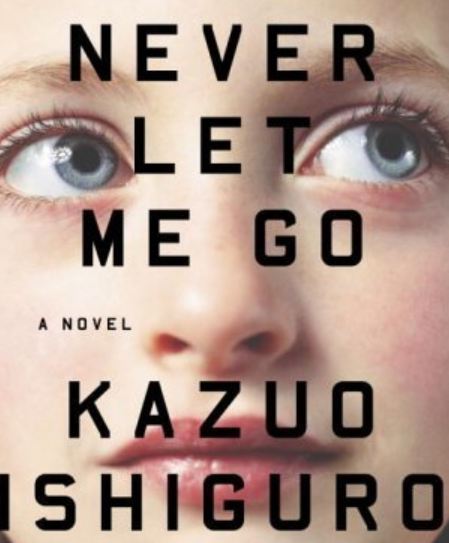
This is a review of NEVER LET ME GO by Kazuo Ishiguro.
I read NEVER LET ME GO as a consequence of belonging to a book club that meets monthly at a local Barnes & Noble store. My wife --- we've been married forty-one years --- recommended it to the group. My wife's been recently reading extensively --- not that she hasn't always --- but more so now because she has chronic cancer. The malignancy, and her treatments for it, keep her down. She can't do the physical activities she used to, so she spends time in less intensive physical activities, like reading. So whereas she used to get a daily physical workout, now her mind gets an extra rigorous one.
My wife found this list: the 1001 novels you should read before you die. This book was the first one on it. She hadn't read it, so she did some research, found data indicating it had been awarded various prizes, given much merit, and had favorable reviews from people on Goodreads, Amazon, and the like. So she recommended that the group read it. Among other suggestions by others, her recommendation won out.
I'm very glad we read it. It is well written, thought-provoking, and, to me, haunting. It is a treatise on morality and ethics blended into a tender, moving, and heartrending story. It was subtly done, not at all jarring or didactic. It seemed kind of like adding exactly the right amount of garlic to a roasting chicken, one that once cooked tastes scrumptious so you want your fill, but you're prevented from doing so.
The novel presents the story of that one wish --- never, as a human being, to be let go of --- which is quite universal. I think everyone wishes to have someone in life who will stick with them to the end, who will always hang on and hang out with them. I remember easily it's main characters: TOMMY D., RUTH, and KATHY H.
KATHY H. is the novel's narrator and protagonist. She reminisces about her youth, growing up in an institution, Hailsham --- a sham of an institution. For Hailsham imposes, we learn as we read through the novel, through subtle manipulation, the ultimate hell upon its occupants. That they, as human clones, are considered inferior to those who are not cloned. They must accept the responsibility to sacrifice themselves, their very lives, as, perhaps, for a while, "carers", and, ultimately, as "donors" by giving up needed vital organs --- their hearts, their lungs, their livers, etc. --- to humans who are not cloned. So Kathy H. as a young girl and adolescent interacts at Hailsham with her friends, Ruth and Tommy D., who then ultimately remain with her beyond Hailsham. In essence, it is Kathy H. who never lets Tommy D. and Ruth go.
Ishiguro nicely sketches out these three characters with unique features and intertwines them. While some in the group found the premise unrealistic, in my situation I found it compelling, thought-provoking, moving.
Saturday, June 2, 2012
THE SCHOLAR OF MOAB
Compiled by a Redactor, who is in a way, its Nick Carraway or Scout Finch, THE SCHOLAR OF MOAB is not the type of fiction that you want to wolf down. Savoring it is certainly the preferred method of consumption. In fact, as you try to digest it, you may want to eat gravel for your gizzard to make sure everything you've pecked up comes out ground down to a movable mass. You don't want it to get stuck in there. I suggest you consume yourself some redrock for that.
The place to get your redrock is at Arches National Park, known for its multitude of natural sandstone arches --- something like 2,000 of them. It's a beautiful place. Arches is also, as I understand it, the home of Suelo, a guy who advocates living without money. Google Suelo and see what I mean. How can you beat that? The Arches National Park is located just outside of Moab, Utah, a quirky place on its own, which general area is the fitting general setting of THE SCHOLAR OF MOAB. Visit or vacation there, preferably, in the spring time or the late fall.
That area's where protagonist, Hyrum Thayne, the scholar of Moab, lives with his devout, sometimes clueless, practicing Mormon wife, Sarah. In the surrounding vicinity resides the very capable --- Is she cagey or crazy or both? --- poet, Dora Tanner. Tanner's poetic verse has been apparently quite enticing, you might say, to Hyrum. Read the book and you'll find out how. You'll also find out what makes Hyrum so enticing, not necessarily in the way Dora has been enticed. Let me just say this: Hyrum was hilarious. Dora describes Hyrum as "affectionate, passionate, caring, independent, brave, lovely, cunning, honest, blind, confused, visionary, thoughtful, ardent, worried, gentle, god-fearing, genteel, bright, exuberant, shrewd, Mormon, handsome, puppyish, deceptive, thankful, fresh, naïve, pagan, scholarly." That pretty much sums him up pretty well. Dora says of herself that she is a Wiccan, has agnostic leanings, might be considered by Hyrum as a "Jack Mormon." She says they never talk about religion but "it seems to haunt" their "conversation beneath the surface of things in telling ways."
The Moab and the La Sal Mountains area are also where the conjoined Babcock twins, William and Edward --- moderated by Marcel --- cowboyed in their younger years. The narrative sketches out their history, including their education, their exploits and professions, and the difficulties of living with a brother slipping into dementia.
The comedian, George Carlin, as I recall, became discouraged and depressed from the unequal treatment given UFO believers compared to religious believers by the media. He observed that media moguls termed UFO believers "buffs" to relegate them to mere hobbyists and enthusiasts. He thought their disparaging characterization by the media, given a universe comprised of trillions and trillions of stars and multitudes of possible planets suitable for habitation, was untenable when compared to the deference given to believers in supreme beings. This novel made me wonder if its BYU-evolutionary-ecologist-professor author didn't read him some Carlin, too. Maybe gain some inspiration there? It's just a thought.
This book is a pastiche of fun, pain, and entertainment. There is plenty of seed on the ground to Peck up and digest. Most of all, I found it unique and compelling. I recommend you read it and see for yourself and let me know.
Sunday, May 6, 2012
A Dirty Job
Friday, April 27, 2012
The Edgar Award for ICEFALL
Thursday, March 22, 2012
Up against the voices of Terry Tempest Williams in WHEN WOMEN WERE BIRDS, FIFTY-FOUR VARIATIONS ON VOICE my articulation wants to fly away to somewhere safe. It wants to find a place where it can hide --- maybe like an owl inside a tree. So my words in this review shouldn't be compared to hers. She is a study in voice, in language, in storytelling. Her book is inspirational in the way scripture can be.
Wednesday, September 15, 2010
THE CLOCKWORK THREE
So my friend Matt Kirby's first novel comes out on October 1 of this year, in a few days. Everyone ought to read it. The title of the book is The Clockwork Three. Of course, I along with my other fellow critiquers are particularly invested in its success, because to some degree or another we all had input in Matt's book, even if it was only to suggest the rearrangement of a sentence or the incompatibility of some particular construction. Not only us in the critiquing group, but also other confidants helped Matt along the way, but mostly the credit goes to Matt and his fine ability to tell a compelling story and to string words together in a most magical way.
The book is targeted at youth. There are essentially three protagonists: Giuseppe, an enslaved street musician, Hannah, a maid at a hotel, and Frederick, the apprentice of a clockmaker. I won't bother here to tell about them any further or about the book, because the reviews that are out there already are more than adequate to compel you to read it. Check out Goodreads and Amazon, and you'll see. Then go buy the book.
Tuesday, August 24, 2010
Refuge
Refuge excels in interweaving several different narratives: that of a dying mother, the influences of natural phenomenon on life and death, the beauty and ugliness of the world, the wantonness and the care and concern of mankind and its institutions, the nuances of religion for good and for bad. It's a book I should revisit, because its subtle shouting voice and its terrible tender stories are ones that seem kindred to me. It somehow captures not only the serene beauty of the bleak desert and the dead sea of the Great Basin where I often live, but also similar places found inside culture and people whereever you are. There is an ebb and flow, not unlike the lap of waves on silent shores.
Sunday, June 14, 2009
Updike’s Rabbit, Run
I like the protagonists in the novels I read to be well-grounded at some point in the story. If the protagonist in a particular novel is not grounded, I expect some major character in the work to be grounded
What do I mean by being well-grounded? I mean that the protagonist or some other major character in the story line can make sense out his or her existence at some point in time. I'm not big on pervasive existentialism; I don't think the world is meaningless or absurd, even though it can seem that way. Therefore, I reject that disorientation and confusion arise because the world is meaningless or absurd. I don't deny that people can believe it is, but my experience in life is that even if somebody believes it is meaningless and absurd, in that person's life there are enough people who discount that notion and live their lives otherwise who need to be accounted for in a work of fiction.
For me, Rabbit, Run fails that test. I didn't find a single redeeming major character in the book that can make sense out of his or her existence at some point in time. First, we have Harry "Rabbit "Angstrom, the twenty-six-year-old former high school basketball star, who now demonstrates kitchen gadgets for the Magipeel Peeler Company. During the entire story, Rabbit is never once grounded. All his longing is for the past, for his stardom as a basketball player, or for some immediate temporal gratification in the present. Rabbit's pregnant wife, Janice, mother of their son, Nelson, likewise has no moment that makes sense to her in the overall scheme of things. Marty Tothero, Rabbit's former high school basketball coach, is as profligate as they come. The same is true of Ruth Leonard, the prostitute. And over against her, is the Rev. Jack Eccles, the young Episcopal minister who would "heal" Rabbit, but in the end is as confused as anybody else in the novel.
The only character with any real potential was little Harry. And look what John Updike did to him.
There's no question of Updike's ability for intelligence. Only of his heart.
Monday, May 18, 2009
Berated by a Hummingbird
I love this time of year, especially looking out my window. The Gambel Oaks are as beautiful as they can be; their new leaves are almost perfect with that spring green, which is closer to yellow than blue on the spectrum. The sky is blue. The day is warm. Life has returned and is burgeoning. It is truly inspiring, especially for one as old and feeling as decrepit as I sometimes do.
The birds flock to the feeder and we've had the usual profusion. One day, in the kitchen looking out the window while visiting with our daughter, Amy, when the weather was still relatively cool and verging on rain, a hummingbird showed up, incredulous. It hovered there, an inch from the windowsill as if to say, "Didn't you have a hummingbird feeder here last year? Could you please find it and put some tasty nectar in it? What's wrong with you, anyway?"
Tonight is the third Monday book reading club and we meet at Barnes & Noble. The book we will be discussing tonight is Rabbit, Run by John Updike. The person who selected that book to read for this month --- she selected it probably because Updike had recently died and the death had been given quite a bit of press time in the news --- will not be there. A couple of other people have indicated they, also, won't be able to attend. I read the book probably in the eighties, but didn't like it and therefore never read anything else by John Updike, at least that I can remember that I did. His worldview, at least in the book, and mine didn't match.
It is also the final episode of 24 for this season. Shelley made double sure I had it scheduled to record. She can't miss it! Now watch, something will go wrong, and it won't record and then will we do?