Showing posts with label dystopia. Show all posts

Friday, August 31, 2012

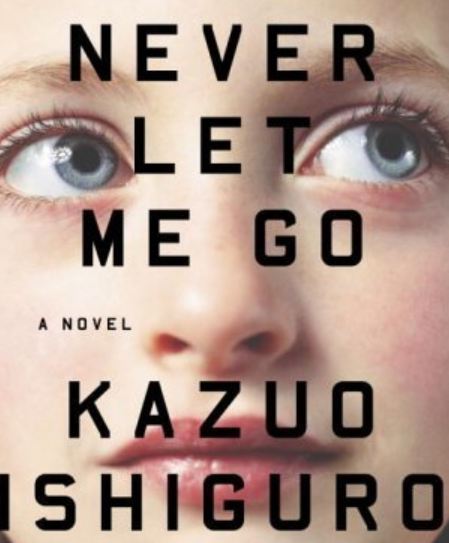
This is a review of NEVER LET ME GO by Kazuo Ishiguro.

I've been debating whether or not I should do this review. There are some awesome ones already. What can I add? Probably nothing.

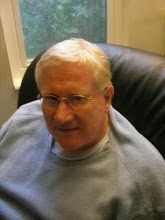
I read NEVER LET ME GO as a consequence of belonging to a book club that meets monthly at a local Barnes & Noble store. My wife --- we've been married forty-one years --- recommended it to the group. My wife's been recently reading extensively --- not that she hasn't always --- but more so now because she has chronic cancer. The malignancy, and her treatments for it, keep her down. She can't do the physical activities she used to, so she spends time in less intensive physical activities, like reading. So whereas she used to get a daily physical workout, now her mind gets an extra rigorous one.

My wife found this list: the 1001 novels you should read before you die. This book was the first one on it. She hadn't read it, so she did some research, found data indicating it had been awarded various prizes, given much merit, and had favorable reviews from people on Goodreads, Amazon, and the like. So she recommended that the group read it. Among other suggestions by others, her recommendation won out.

I'm very glad we read it. It is well written, thought-provoking, and, to me, haunting. It is a treatise on morality and ethics blended into a tender, moving, and heartrending story. It was subtly done, not at all jarring or didactic. It seemed kind of like adding exactly the right amount of garlic to a roasting chicken, one that once cooked tastes scrumptious so you want your fill, but you're prevented from doing so.

The novel presents the story of that one wish --- never, as a human being, to be let go of --- which is quite universal. I think everyone wishes to have someone in life who will stick with them to the end, who will always hang on and hang out with them. I remember easily it's main characters: TOMMY D., RUTH, and KATHY H.

KATHY H. is the novel's narrator and protagonist. She reminisces about her youth, growing up in an institution, Hailsham --- a sham of an institution. For Hailsham imposes, we learn as we read through the novel, through subtle manipulation, the ultimate hell upon its occupants. That they, as human clones, are considered inferior to those who are not cloned. They must accept the responsibility to sacrifice themselves, their very lives, as, perhaps, for a while, "carers", and, ultimately, as "donors" by giving up needed vital organs --- their hearts, their lungs, their livers, etc. --- to humans who are not cloned. So Kathy H. as a young girl and adolescent interacts at Hailsham with her friends, Ruth and Tommy D., who then ultimately remain with her beyond Hailsham. In essence, it is Kathy H. who never lets Tommy D. and Ruth go.

Ishiguro nicely sketches out these three characters with unique features and intertwines them. While some in the group found the premise unrealistic, in my situation I found it compelling, thought-provoking, moving.

Saturday, September 12, 2009

The Knowledge to Give

Lowry scores my highest mark for THE GIVER: a capital A for AWESOME.

THE GIVER appeals to my deepest being, going into emotional depths where I'm most aware, where I experience anger, sadness, and fear but also enjoyment, surprise, and love. Not only that but it stimulates and informs my intellect. It is such a gut-wrenching but ultimately happy story. It makes me --- at sixty-one --- feel like a boy again, a boy who thinks he can make the impossible possible, who might be able to help a dulled humanity feel more fully again. I believe all of existence waxes and wanes, ebbs and flows, evolves and devolves with a slow but ever-present upward spiral. This story addresses one community's wane, its ebb, its devolution. Jonas, as a member of that community, is selected to spend his time learning about his community's state of affairs. Then, as the story climaxes, he makes his choice and acts.

Overall, Jonas is a "chosen" hero --- not unlike one chosen in natural selection --- who's unafraid to explore every facet of being, to admit not just the sensory input, but to experience emotionally as well as intellectually. He's brave enough, in the end, to try to escape the constraints of knowledge and experience that have crept into his community of origin. Such perversions are no less ugly than those of Nazism or those characterized in the great literature of the past--the stories of Bradbury, Huxley, and Orwell and others. This story informs those. Here we have a boy who wants to progress on to a new and better life, not just for himself but for the sake of his entire community. He wants them to have it too. He is willing to risk his life for it. For me, this is the purpose of literature, of life. It is man's highest virtue. To do good; to help others. As the boy in Carmac McCarthy's THE ROAD asks, "Are we still the good guys?"

The story makes it clear --- as do all great stories --- that morality comes by experiencing choices tending toward either good or evil and in having the courage to choose that which trends toward good or otherwise suffering tragedy. Jonas isn't ever over-inflated with pride. He retains humility in learning, eventually hoping for a culture beyond his limiting one.

Critics suggest the book's climax presents "a symbolic faux-death event", as if that would somehow be a bad thing. But I don't read it that way at all. Its literal language doesn't so read. Two children literally coast into a more abundant realm, still alive, still aware. Ready to receive and to give.

Further, critics complain that Lowery fails with THE GIVER because Jonas's community isn't based upon a real world of its author, as if a symbolic or hyperbolic one of the imagination is flawed, or somehow a weakness. To the contrary, in the progress of mankind, imagination becomes truth. Or, as in the fanciful words of Ursula LeGuin's character, Genley Ai, truth is a matter of the imagination. What is ultimately in the realm of mankind is what was first imagined well and then subjected to free agents who acted upon it for good.

THE GIVER presents a degenerated human power structure. How or why it has degenerated is not important in its overall scheme. It kills people, the ultimate evil. " . . . twins are being born tomorrow, and the test results show that there are identical." "One for here, one for Elsewhere . . ." This is not ambiguous. It's not an issue of unborn or near dead. It is out and out, clear-cut, calculated murder. It's Bergen-Belsen, Dachau, and Auschwitz, but on a more massive scale.

At the same time, the human power structure that has chosen wickedness ironically chooses Jonas as the Receiver. There are two things Jonas has that are vital. The first is his ability to choose freely. Everyone has that. All his contemporizes have it and utilize it. The other is knowledge and experience. It is this later that the others are lacking in great measure.

There is no magic in THE GIVER, no smoke and mirrors as some have suggested, but only the issues of knowledge and choice. Every child is born with the ability to choose. Not every child lives with the ability to get the necessary knowledge and experience required to choose well. It seems that to do so, to some degree, we have to be "chosen," and then, even then, we have to choose to Receive it. But ultimately, what is most important, after all is said and done, is to choose to be a giver.

THE GIVER.