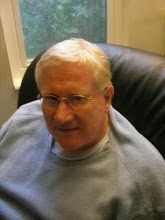
Sunday, August 30, 2009

Why People Leave the Church

I usually go to church on Sunday. Not every week, but most of the time. That's a change --- my not going. Throughout my adult life, I have attended almost all of the time. I didn't today. I have gone less lately. There was an early morning, stake-sponsored priesthood meeting at 7:30 AM. I didn't really get up early enough to get ready for it, and even if I had, I probably wouldn't have bothered to get ready for fear it would disturb my sleeping wife. She had said she didn't intend to go to church last night, and she was sleeping soundly. Anyway, I didn't get up for priesthood meeting, and then I didn't get ready to go to the block session, either. And it wasn't just because I couldn't for fear of waking my wife, or because she wasn't going. Mostly, it was because of what was on the agenda.

The stake had indicated its meeting was focusing on communication between boys and fathers. They did so by sending out an e-mail with a link in it to a short video on the subject. In the church-produced video, one talkative boy was gabbing almost without stop to his father, who was listening, and trying to get a word in edgewise. They were painting a fence. Next door, another father was busy doing his thing, and his son was busy playing video games or something. Bottom line, they weren't talking, they weren't communicating, and it wasn't a good situation like the other situation was supposed to be. In the next scene, the other father and son are washing one of those avant-garde vinyl fences together, and the boy asks his dad why have to do it, observing that it doesn't seem to need it. Anyway, I took the message to be that the other father had taken a lesson by observing the first father and son painting the fence and the father listening to his son and then being able to communicate with him.

Several weeks ago, maybe even a couple of months ago, a brother in our ward was scheduled to give a lesson to the combined priesthood and relief society. He had announced that it was about why people leave the church. I responded to his e-mail, being my typical smart-alecky self, and suggested that rather than him tell us or referring us to some apostle telling us, that it might be a good idea to invite somebody who has actually left to come and say why they did so. Well, it created kind of furor since I had disseminated my suggestion to the same recipients as the original e-mail had gone to. The session was canceled, and somebody else taught something totally different that week. I don't know why it was canceled --- nobody ever said that I recall, but I have an idea it might have had something to do with the furor I created, but I'm not sure. And, perhaps, I'm being egotistical to think anybody cares what I think or do.

Anyway, some days ago, perhaps even a week or so ago, members of the group got an e-mail from the group leader that this same guy was on the schedule to give this lesson on why people leave the church again. The group leader suggested that there wasn't anything to prepare, and that we should just show up. A few hours later, the guy himself sent out e-mail to everybody, telling them they should read a talk by an apostle (Bednar) on why people leave the church --- bottom line, they're offended and ought to get over it, because they are robbing themselves of blessings --- but that there would only be time for his lecture, and there would be no time for questions or a discussion of the topic.

The irony in the situations seemed too stark for me to cope with, so I didn't go. In the first message -- the stake one --- communication is touted as so important. In the second, any outside communication will not be tolerated.

So, I guess I need to get over the offense I took, and quit robbing myself of blessings.

Thursday, August 27, 2009

Empathy

In the Newbery winner, The Giver, Lois Lowry creates a scene that I want to memorialize here. It is two thirds to three fourths of the way into the book, so, by that time, Jonas has been selected to become The Receiver and has already received substantial training in becoming such. For some reason, the community declares an unscheduled holiday, and Jonas is delighted, presumably because he's been working so hard in receiving. He heads off to find his best friend, Asher. He finds Asher and a group of other children playing together, including Fiona. They are playing war, shooting at each other and acting shot. It disturbs Jonas, because he has already received the memory of war and its pain and other horrors. Therefore, his counter with his friends, Asher and Fiona, doesn't go well. Jonas discovers that he cannot relate as well with them now, because they don't have the memories of war, like he does.

For an undocumented alien (I'm thinking about Aljehandro here), such an experience --- at least in some part --- must be familiar with respect to trying to have or maintain friendships with citizens who don't constantly face the same threat of discovery and deportation. Of course, what is involved is an ability to empathize. In order to empathize, experience is required. A memory of that experience is essential in order to fully understand. Of course, the experience doesn't have to be firsthand. It can be experienced vicariously, for example, by reading a book, or seeing a movie, etc.

Tuesday, August 25, 2009

Big Brother --- Little Brother

I'm about a quarter of the way through Cory Doctorow's novel, Little Brother, about a group of teenagers in San Francisco who lived through a terrorist attack on the Oakland Bay Bridge and the BART system. It's a fast-paced, interesting novel.

The protagonist is Marcus Yallow. He and a few friends decide to play hooky from school in order to play some kind of nerd game --- as I think back about it it reminds me somewhat of something to do with GPS finding, but I'd have to flip back and read that part again confirm that up --- when terrorists strike. In the aftermath of the attack, masses of people are hurrying away, or, perhaps, being herded away. Marcus's friend, Daryl, gets stabbed by somebody in the melee, and when they hurry up from the underground BART system onto the street to try to flag somebody down to help them, they are taken captive by employees of Homeland Security. They are then held as enemy combatants, and their fundamental rights as citizens are denied them.

After Marcus is freed, it is apparent that he will attempt to fight back. It is obvious that the title, Little Brother, is a play on Orwell's novel, 1984.

I can hardly wait to get back to it tonight at bedtime when I do most of my frivolous reading.

Monday, August 24, 2009

Immigration

It seems to me that the mindset of most people opposed to any relief for the masses of undocumented workers --- some estimates indicate as many as 11 million or more --- in the United States from other places in the world --- mostly, I guess, from places south of the United States like Mexico, Central America, and South America --- is to view it completely from their own personal perspectives as citizens of the United States. What does it mean to me as a citizen to have them here? How am I as a citizen affected? Is having them here in my best interest? Citizens responding to articles I have read have little compassion or empathy for the people who have been here undocumented for long periods of time. "You are illegally here." They don't analyze the conditions and circumstances that caused the individuals to come to the United States to begin with. Furthermore, they don't take note of the circumstances the undocumented immigrants would be cast into if deported.

Citizens don't seem to want to take any responsibility for the fact that our government --- we the people --- made a mess of our immigration laws and our enforcement of them. We did not secure our borders. They are not secure today. Many people don't want to recognize that we didn't enforce our laws or protect our borders even though there was a previous major reform intended to fix the problem. The law and the lack of enforcement had the overall effect of encouraging and, perhaps, even enticing those without documentation to cross the borders or to overstay their visas in violation of the laws and regulations on the books. We the people don't want to pay for the enforcement of the laws necessary to keep the immigrants out. Furthermore, the powerful and rich have their own motivations relative to allowing porous borders. With money and power, you get much of what you want.

Sunday, August 23, 2009

We Are Americans

MSN's link to Newsweek today featured a story about a college student who had gone for a semester to the University of California Berkeley at the cost of something like five thousand dollars but was unable to continue because she didn't have any more money. Nothing unusual about that, but this particular individual is an undocumented individual who was brought to the United States by her parents at the age of six months. I thought that highly interesting in light of my present project. It suggests that my premise isn't far-fetched.

As interesting as the article was, even more interesting were the reactions of the readers to the article. There is a whole lot of emotion out there, the bulk of it seems to be opposed to undocumented workers being in the United States at all with little or no tolerance for their plight. However, most of the analysis is quite superficial and without depth. There's a new book out I need to get. It is called We Are Americans. The following is a synopsis of it from the publisher's webpage.

About 2.4 million children and young adults under 24 years of age are undocumented. Brought by their parents to the US as minors—many before they had reached their teens—they account for about one-sixth of the total undocumented population. Illegal through no fault of their own, some 65,000 undocumented students graduate from the nation's high schools each year. They cannot get a legal job and they face enormous barriers trying to enter college to better themselves—and yet America is the only country they know and, for many, English is the only language they speak.

What future do they have? Why are we not capitalizing, as a nation, on this pool of talent that has so much to contribute? What should we be doing?

Through the inspiring stories of sixteen students—from seniors at high school to graduate students—William Perez gives voice to the estimated 2.4 million undocumented students in the United States, and draws attention to their plight. These stories reveal how—despite financial hardship, the unpredictability of living with the daily threat of deportation, restrictions of all sorts, and often in the face of discrimination by their teachers—so many are not just persisting in the American educational system, but achieving academically, and moreover often participating in service to their local communities. Perez reveals what drives these young people, and the visions they have for contributing to the country they call home.

Through these stories, this book draws attention to these students' predicament, to stimulate the debate about putting right a wrong not of their making, and to motivate more people to call for legislation, like the stalled Dream Act, that would offer undocumented students who participate in the economy and civil life a path to citizenship.

Perez goes beyond this to discuss the social and policy issues of immigration reform. He dispels myths about illegal immigrants' supposed drain on state and federal resources, providing authoritative evidence to the contrary. He cogently makes the case—on economic, social, and constitutional and moral grounds—for more flexible policies towards undocumented immigrants. If today's immigrants, like those of past generations, are a positive force for our society, how much truer is that where undocumented students are concerned?

Friday, August 21, 2009

A Brief and Less Than Wondrous Posting

Well, I finished reading The Brief Wondrous Life of Oscar Wao. Now I need to read it again. I am not that well suited to appreciate it with the depth it obviously deserves. I am woefully inept relative to its historical setting, the culture of its protagonist, and the incredible talent of its author. So I will be picking it up again -- not literally but figuratively because the book is on my Kindle --- and going through it with a fine-toothed comb, to use a cliché and evidence my ineptness over against Junot's. In fact, the book is so compelling it is difficult to even remember its title. Not only that, but the title includes an allusion to luminary, Oscar Wilde. Who would've thunk it? In fact, as I began it and read on through, it I kept looking up Oscar Wao, trying to figure out where that had come from, and it was only tonight when I found out that it referenced the playwright.

Thursday, August 20, 2009

Night Vision

How amazing is the world we live in and the developments we make! Now developers are honing in on night vision drops. You pop a pill or squeeze some drops into your eyes and it's nighttime vision and not go-to-sleep time. A particular deep-sea fish, that will remain unnamed here, can see red light. Now, remember there is a spectrum of different light, but this particular fish --- I think they may call it the dragonfish, I know I'm going back on my promise by giving it a name --- is involved. So anyway, a scientist figured out what chemical was responsible for the ability of the fish to see red and found out it was chlorophyll. Yeah, I know, chlorophyll as in what plants generate in photosynthesis. So further experimentation led to information that chlorophyll enables the eyes to double their ability to see in low light. VoilĂ  night vision.

I think people should sleep at night. I prefer it that way, myself, and it irritates me knowing people are out prowling under the cover of darkness. Before they developed night vision, they developed several sleep aids. I suggest those who want to prowl at night check out a good sleep aid. Oh, did I mention. It's the military that's highly interested in night vision drops for the eyes. What a surprise.